




What Small Business Owners Wish They Knew Before Building a Website

Nearly every small business owner who's been through a website project comes out the other side with the same feeling: I wish someone had told me a few things before we started.
Not because the project was a disaster — often it wasn't. But because so much of what determines whether a website succeeds is decided before a single page is designed, in choices the owner didn't know were choices. By the time you learn those lessons the normal way, you've usually already paid for them once.
The biggest website lessons are usually learned after launch—but they're far cheaper to learn before the project even begins.
So here's the shortcut: the things owners most often say they wish they'd known before building, collected in one place, so you can walk in prepared instead of learning them the expensive way.
1. The Goal Should Come Before the Design
The most common regret isn't about how the site looks. It's that the project started with "we need a website" instead of "here's what we need the website to do."
It sounds like a small distinction, but it changes everything downstream. A site built to "look professional" and a site built to "get more booked appointments" are two different sites, even if they use the same photos. When the goal is vague, every later decision — what goes on the homepage, what the buttons say, what happens first when someone lands — gets made on instinct instead of on purpose. Owners who nail this down first almost always wish they'd done it; owners who skip it almost always wish they hadn't.
Before you talk to anyone about building, get honest about the single most important thing you want the site to accomplish. Everything else gets easier once that's clear.
2. You Are Not the Audience
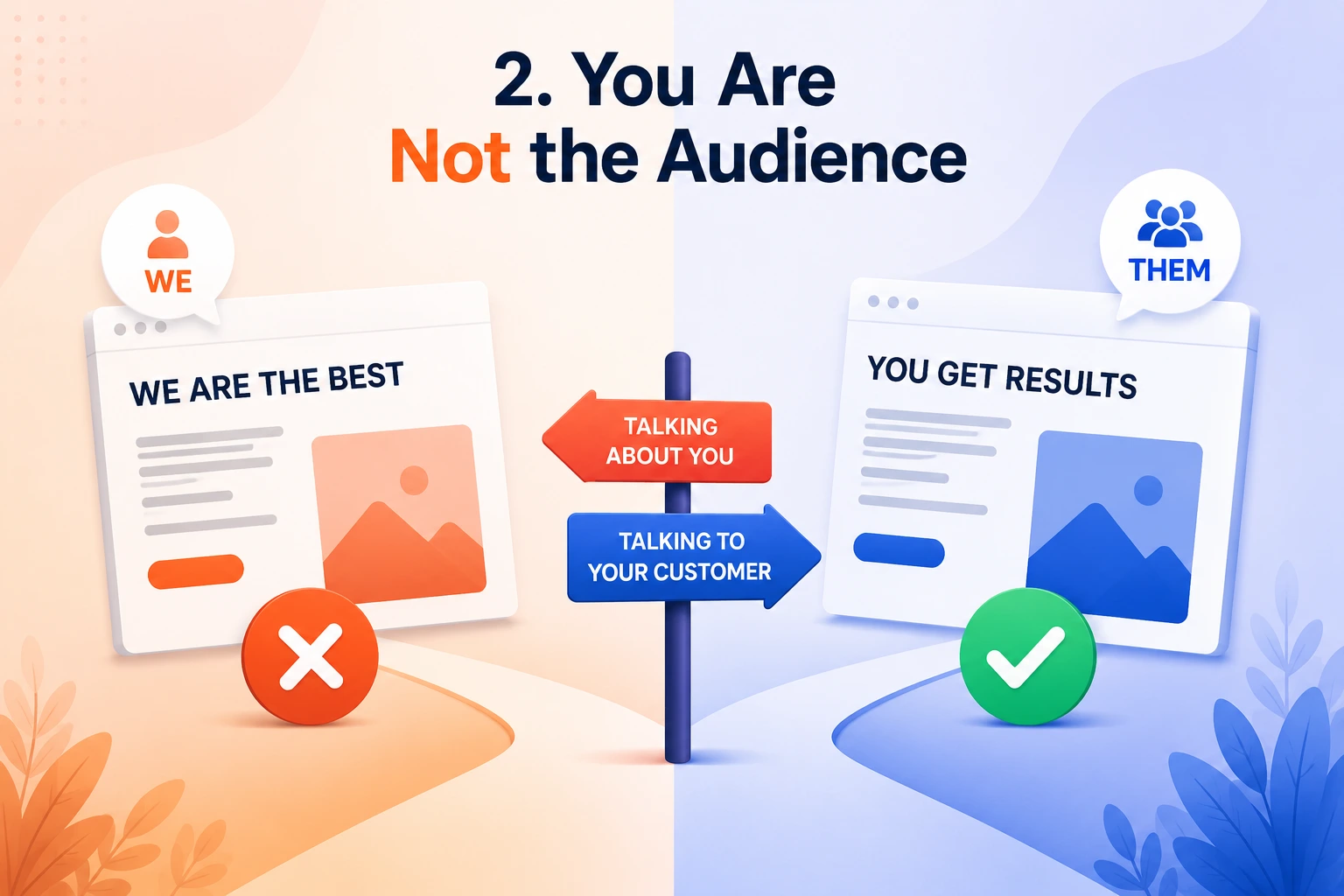
A quiet trap: owners naturally build the site they would want to look at. But you already know your business. You know why you're good, what your services are, why you're different. Your visitors know none of that — and the site has to work for them, not for you.
The best website isn't the one you like the most—it's the one your customers understand the fastest.
The things that feel obvious or boring to you are often the exact things a new visitor needs spelled out. The clever industry language that sounds professional to you can read as confusing jargon to them. Owners frequently wish they'd tested the site on someone who knew nothing about the business, because that person would have flagged the confusion the owner was too close to see.
3. Content Is the Hard Part, Not the Design
Almost everyone underestimates this one. Going in, the design feels like the big challenge — the look, the layout, the colors. In reality, the thing that stalls projects and weakens results is the content: the actual words, the photos, the specifics of what you offer and why someone should choose you.
Owners routinely wish they'd started gathering content earlier, because "the website is taking forever" is very often code for "we still haven't written the About page or pulled together decent photos." A great design wrapped around thin, generic content still underperforms. Deciding early who will write it, and giving that real time, prevents the most common source of delay and disappointment.
Great design attracts attention, but great content earns trust—and trust is what turns visitors into customers.
4. Launch Is the Middle, Not the End

One of the most valuable things to know before starting is that going live is not the finish line — it's the halfway point. A website that never gets touched again slowly drifts out of relevance, and the results it produces on day one are rarely the results it produces two years later without any attention.
Owners who treated launch as "done" often wish they'd planned from the start for what happens after: who keeps it updated, who watches whether it's actually working, who's reachable when something needs to change. Building that expectation into the plan from the beginning — rather than discovering the need for it later — saves a lot of frustration and, usually, a premature rebuild.
5. The Cheapest Option Is Rarely the Cheapest
Budget matters, especially for a small business, and there's nothing wrong with being careful with money. But a lot of owners look back and realize the truly expensive path was the one that looked cheapest upfront.
The pattern is familiar: pick the lowest bid, get something quick, then spend the next two years unable to reach anyone for changes, eventually paying someone else to redo it. The number on the first invoice turned out to be a small part of the real cost. What owners wish they'd weighed instead wasn't just price, but whether the person or team would actually be there afterward — because a website is a relationship that continues long after the build.
The cheapest website often becomes the most expensive once you factor in fixes, rebuilds, and lost opportunities.
6. You Should Be Able to Understand the Answers
Finally, many owners wish they'd trusted a simple instinct earlier: if you ask a developer or agency a straightforward question and the answer leaves you more confused than before, that's information.
You don't need to understand the technical details. But a good partner can explain what they're doing, and why, in plain language you can follow. When the explanations are all jargon and you're nodding along without really understanding, it's easy to end up agreeing to things that don't serve you. The owners who felt best about their projects were usually the ones who insisted on understanding the decisions, not just approving them.
How We Think About It
Most of these lessons come down to one thing: the decisions that make or break a website happen before and after the build, not just during it. That's the part Weblianz was built around. Across web, apps, and now AI-driven tools — the approach has stayed the same: start with what the business actually needs to accomplish, keep the conversation in plain language, and stay in the relationship after launch instead of disappearing. It's a big part of why the majority of our clients come back for the next project instead of starting the search over.
That shows up differently depending on the business. For a trading platform like Galileo FX, it meant getting clear on what the site actually needed to accomplish before any screen got designed. For an EdTech platform like Training Camp, it meant staying in the relationship well past launch as the product kept evolving, instead of treating delivery as the finish line. We've carried that same starting point into work with Single Rulebook, wfp.org, and merly.ai — different industries, same first question: what does this business actually need the site to do, before anything gets built.
If you're about to build a website — or rebuild one that didn't work the first time — the best time to get these things right is before the project starts, not after.
If you'd like to talk through what your website actually needs before committing to anything, we're happy to help — no pitch, just a real conversation.

Comments
Laura Mitchell
I wish I had read this before we started our website project. It would have saved us months.
ReplyRyan Cooper
The point about defining the goal before the design is something every business owner should hear.
ReplyMelissa Grant
Content was definitely the hardest part for us. This article explains it perfectly.
ReplyThomas Reed
Great advice. Launch day really isn't the finish line.
ReplyEmily Scott
We chose the cheapest option and ended up paying twice. This article is spot on.
ReplyJames Wilson
Very practical guidance without unnecessary technical jargon.
ReplyLeave a Comment
Your email address will not be published. Required fields are marked *