




Tired of Freelance Marketplaces? How to Hire a Developer Who Actually Delivers
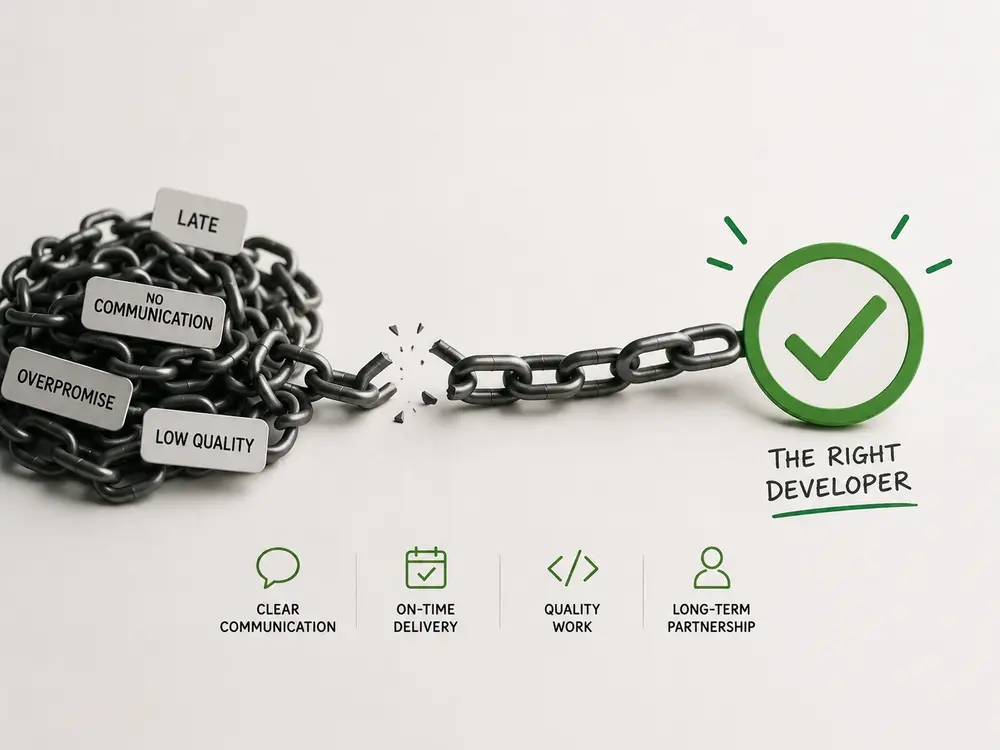
If you've ever hired a developer on a freelance marketplace, you probably know the cycle by heart. You post a project. Forty proposals arrive in an hour, half of them clearly copy-pasted. You pick someone with good reviews and a fair price. The first week goes fine. Then the updates slow down, the communication gets vague, the "almost done" stretches into weeks, and you end up either settling for something that half-works or starting over with someone new.
It's exhausting — and after a couple of rounds, a lot of small business owners conclude that hiring a developer is just inherently painful. It isn't. The problem usually isn't developers in general; it's the way marketplaces are set up, and the way most people hire within them. Once you understand both, you can hire someone who actually delivers — whether that's on a marketplace or somewhere better suited to your project.
Here's how to do it.
First, Understand Why Marketplaces Feel This Way
Freelance marketplaces optimize for volume and price, not for fit. That's not a flaw you can fix by trying harder — it's the design. When forty people bid on your project, the ones most likely to win are the ones who bid fastest and cheapest, which selects for freelancers competing on price rather than on doing the job well. The platform's job is to match transactions, not to make sure the person you hire is genuinely right for a business like yours.
That has two consequences. First, you carry all the vetting yourself — the platform's star rating tells you someone completed past jobs, not whether they'll understand your business or stick around when it gets complicated. Second, the incentive structure quietly rewards moving fast and moving on. A freelancer juggling many small gigs to make the economics work has little reason to invest deeply in any single one.
None of this means good developers aren't on these platforms — plenty are. It means the platform won't hand them to you. You have to hire in a way that filters for them yourself.
"Freelance marketplaces are built to match transactions, not partnerships," says one small business advisor who's helped dozens of owners navigate the hiring process. "The platform can tell you someone finished their last ten jobs. It can't tell you whether they'll still answer your calls on job eleven."
Get Clear on the Problem Before You Post the Job

The single biggest reason projects go wrong starts before anyone is hired: the job is described as a task instead of an outcome. "Build me a website" or "I need a booking system" tells a developer what to make but nothing about what it's for. Two developers can both deliver exactly what you asked and produce completely different results, because you never defined what success actually looks like.
Before you hire anyone, get clear on the outcome. What should be different for your business once this is done? More booked appointments? Fewer phone calls asking the same questions? A store that actually processes orders? When you lead with the outcome, two things happen: you attract people who think in terms of solving problems rather than ticking off tasks, and you gain a clear standard to hold the work against later.
"The businesses that hire well don't start with 'we need a developer,'" notes a longtime freelance-hiring consultant. "They start with 'here's the outcome we need,' and let that shape who they bring in. Skip that step, and even a great developer is just guessing at the target."
Vet for Communication, Not Just Portfolio
Everyone checks the portfolio. Far fewer people check the thing that actually predicts whether a project succeeds: how the person communicates before you've paid them a cent.
The vetting is simple. Ask a few real questions about your project and watch how they respond. Do they ask clarifying questions back, or just say "yes, I can do that" to everything? Do they explain things in plain language you can follow, or hide behind jargon? Are their replies prompt and clear during the one phase where they're actively trying to win your business? Because here's the uncomfortable truth: however responsive someone is before you hire them is the best case. It rarely improves after the deposit clears. If communication is already vague at the courtship stage, that's your preview of the whole project.
Ask the Post-Launch Question Up Front
Most hiring conversations focus entirely on the build and never mention what happens after. That's a mistake, because "after" is where most of the pain lives. A site or app that's delivered and then abandoned the moment the invoice is paid isn't really finished — it's just handed off.
So ask directly, before you hire: what happens after this goes live? Who do I contact when something breaks or needs a change? Is there any ongoing support, or does the relationship end at delivery? You're not just gathering information — you're watching whether they have a real answer. Someone who's thought about the long term will answer clearly. Someone who only wants the quick transaction will get vague, and that vagueness is the same silence you'll hear later when you actually need them.
Start Small, but Test the Relationship — Not Just the Skill
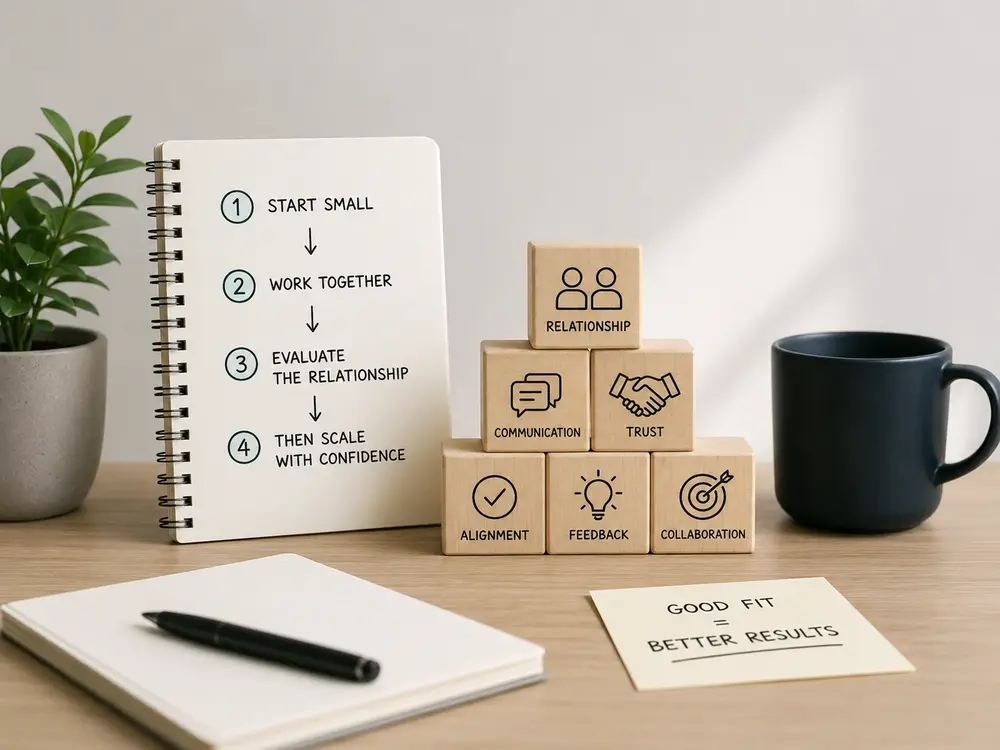
A smart way to de-risk any hire is to start with a smaller, well-defined piece of work before committing to the whole thing. Most people use this to test whether someone can do the work. Use it to test something more important: what they're like to work with. Do they hit the timeline they set? Do they communicate proactively when something changes, or go quiet until you chase them? Do they treat a small job with the same care they'd give a big one? Technical skill is table stakes. The relationship is what actually determines whether the full project delivers.
Know When You've Outgrown the Marketplace
Marketplaces are fine for small, self-contained, one-off tasks — a quick fix, a simple landing page, a defined chunk of work. But if what you actually need is a partner who understands your business, builds something that fits it, and stays reachable as it grows, you've probably outgrown the marketplace model, and no amount of careful hiring inside it will fully solve the mismatch. At that point, the better move isn't a better freelancer — it's a team whose entire model is built around the things marketplaces structurally can't offer: understanding the business first, communicating in plain language, and staying in the relationship after launch.
How We Do It Differently
This is exactly the gap Weblianz was built to fill. Across web, apps, and now AI-driven tools, the approach has stayed the same: start with the business outcome rather than the task list, keep communication clear and in plain language throughout, and treat launch as the middle of the relationship, not the end of it. It's a big part of why the majority of our clients come back for the next project instead of heading back to the job board.
That standard holds regardless of the project. With a trading platform like Galileo FX, it meant staying reachable and clear well past launch, not disappearing once the invoice cleared. With an EdTech platform like Training Camp, it meant treating a growing product as an ongoing relationship, not a one-time handoff. We've carried that same approach into work with Single Rulebook, wfp.org, and merly.ai — different industries, same standard: understand the business, communicate clearly, and stick around.
If you're tired of the post-a-job, cross-your-fingers cycle and just want someone who understands what you're trying to do and actually delivers it, that's worth a conversation.
If you'd like to talk through your project with a team that treats it like a partnership, not a transaction, we're happy to help — no pitch, just a real conversation.

Comments
Brian Walsh
This is my exact cycle for the last three years. Post a job, hire the best-reviewed bid, watch communication die by week three. Never connected it to how the platform itself is designed until now.
ReplyNina Patel
The point about vetting communication before you've paid anyone is so underrated. How someone responds during the sales pitch really is the best version of them you'll ever see.
ReplyCarlos Mendez
Asking about post-launch support upfront would have saved us so much frustration. Our last developer vanished the day the invoice was paid.
ReplyRachel Kim
Starting with a small paid task to test the relationship, not just the skill, is a great idea. Wish I'd thought of framing it that way sooner.
ReplyTom Reilly
The line about outgrowing the marketplace model really landed for us. We kept hiring better freelancers and still hit the same wall, because the mismatch was never about skill.
ReplySandra Lee
Same experience here. Once the project needed an actual long-term partner instead of a task-doer, marketplaces just weren't built for that.
ReplyLeave a Comment
Your email address will not be published. Required fields are marked *