




The Website Problem Most Small Businesses Don't See Coming

Most website problems announce themselves. The site goes down. A page throws an error. The contact form stops sending, or a customer calls to say the checkout is broken. Something fails, you notice, you get it fixed. It's stressful in the moment, but at least it's visible — you know there's a problem, so you can solve it.
The website problem most small businesses don't see coming is the exact opposite kind. Nothing breaks. The site keeps loading. The pages are all still there. Everything looks precisely the way it did the day it launched. And that is exactly what makes it so dangerous — because while nothing appears to be wrong, the site is quietly getting less and less effective every single month.
The most dangerous website problems aren't the ones that break your site — they're the ones that quietly reduce its ability to bring you customers.
There's no error message for a website that's slowly becoming irrelevant. And by the time the symptoms are obvious enough to act on, you've usually already lost months of customers you'll never know about.
The Slow Fade
To understand how this happens, it helps to stop thinking of a website as a fixed object. It isn't a finished painting hanging on a wall. It's more like a runner in a race that never stops — and the other runners keep getting faster.
A website doesn't exist in a vacuum. It exists in a market that's constantly moving around it. Search engines change what they rank and reward, sometimes several times a year. Customers change how they search, what devices they use, and what they expect a credible business to look like online — expectations that ratchet up steadily as everyone else's sites improve. Competitors launch newer, faster, clearer sites, or start actively investing in getting found while you stand still.
None of that touches your website directly. Not a single pixel on your site changes. But all of it changes where your website stands relative to everything else — and relative position is what actually determines whether customers find you and choose you.
Standing still in a moving market isn't staying the same — it's slowly falling behind.
So a site that ranked well and converted fine at launch can slide, month by month, into the background. Not because it got worse in any measurable, on-screen way, but because the ground shifted underneath it while it stayed perfectly still. Standing still, in a moving market, is the same as moving backward.
Why There's No Alarm Bell
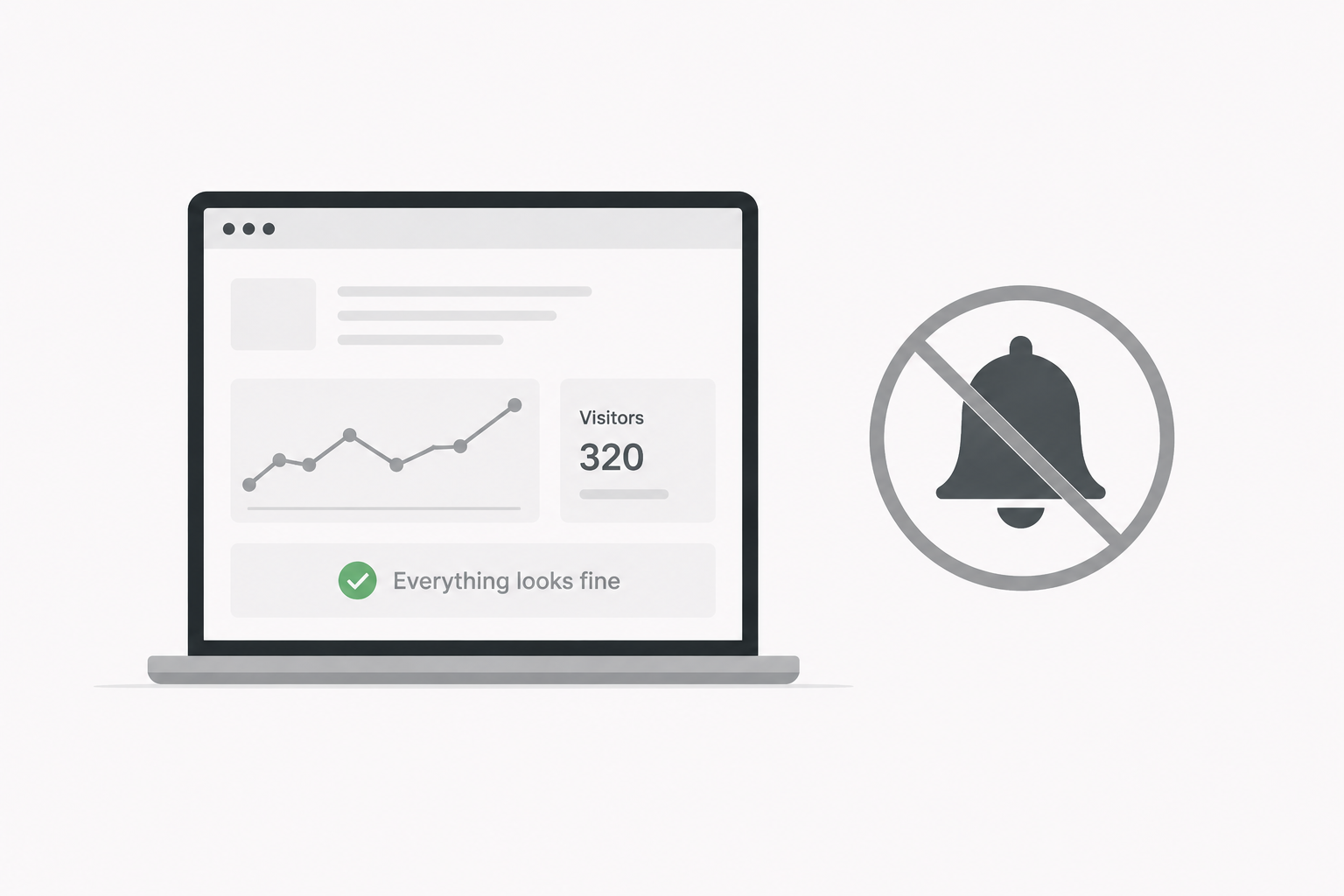
The reason this catches so many business owners off guard is that there is no notification for it. Your website will happily tell you when something is broken — a page won't load, a plugin will throw an error. It will never tell you when something is merely underperforming.
Nothing pops up to say your search ranking dropped from the top of page one to the bottom. No alert fires when your bounce rate creeps up because the site now feels slow next to competitors. No email arrives to mention that the contact form which used to bring in five leads a week is now bringing in one. These are the metrics that actually determine whether the website is doing its job — and they're precisely the ones that degrade silently.
Your website rarely tells you when it's losing customers—it simply sends fewer of them.
So from the owner's chair, everything seems fine. The site is live. It looks the way it always did. It's easy to assume it's "handled" and turn attention to the hundred other things a small business demands. Meanwhile, the numbers that matter are drifting in the wrong direction, invisibly.
Why It Gets Misdiagnosed
Here's where the slow fade does its real damage. Because the decline is gradual and invisible, when the effects finally surface, they almost never get traced back to the website.
You just start noticing fewer calls. Fewer form fills. Fewer new customers mentioning they found you online. And because it happened slowly, over months, it's natural to attribute it to something else — a slow season, a tough economy, more competition in general, bad luck. All plausible. All easy to shrug off. None of them point at the website, because the website looks exactly the same as it did when things were working.
By the time the pattern is undeniable, a lot of business has already quietly walked past the front door and gone to a competitor whose site was being tended. The most frustrating part is that this is lost business you never even see — there's no record of the customer who searched, found someone else's site above yours, and clicked it instead. They simply never became your problem to notice.
Catching It Before It Costs You
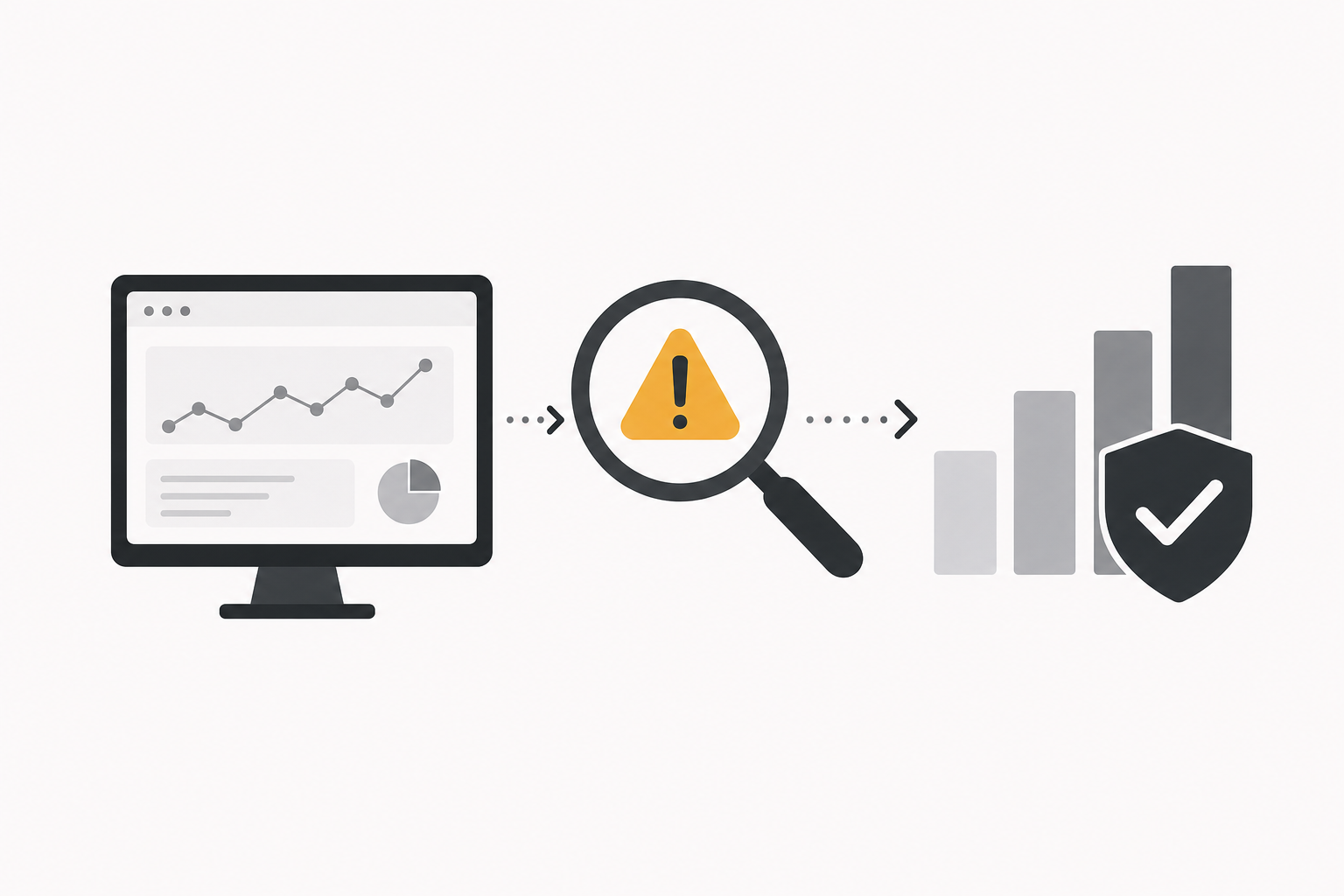
The good news is that the fix isn't complicated or expensive. It doesn't require constant tinkering or a big new budget. It requires one shift in habit: checking on the website's performance the way you'd check on any other part of the business, instead of assuming that "it's live" means "it's working."
In practice that means occasionally looking at a few simple things. Are people still finding the site — is it showing up when customers search for what you offer? Once they land, are they doing anything, or leaving immediately? Do the parts that generate business — the form, the booking link, the phone number, the call to action — still work and still reflect what you actually sell today? None of these checks are technical enough to require you personally to become an expert. They just require someone to actually look, a few times a year.
A handful of small checks done regularly catches the slow fade while it's still a minor adjustment, long before it compounds into a lost quarter. The businesses that avoid this problem aren't the ones with the most expensive websites. They're simply the ones who kept an eye on the site instead of assuming silence meant success.
How We Approach It
This is one of the main reasons Weblianz doesn't treat launch day as the end of the job. Over 10+ years and 1,000+ projects — across web, apps, and now AI-driven tools — the pattern has held: the clients who get the most out of their sites are the ones whose sites are watched and maintained, not the ones left to drift until a full rebuild feels necessary. It's a big part of why the majority of our clients come back for the next project rather than starting the search over.
If your website has been quietly sitting there for a while and you're genuinely not sure whether it's still doing its job, that uncertainty is worth resolving now — before the slow fade turns into a number you can actually feel.
If you'd like a straight answer on whether your website is still working for you, we're happy to take a look — no pitch, just a real conversation.

Comments
Michael Carter
This explains exactly why our website slowly stopped bringing in leads even though nothing seemed broken.
ReplySarah Thompson
I never realized standing still online was the same as falling behind. Great perspective.
ReplyDaniel Brooks
We've been assuming our site was fine because it still looked good. Time for a proper review.
ReplyOlivia Bennett
The section about there being no alarm bell really hit home. We only noticed our decline months later.
ReplyKevin Richardson
Excellent reminder that a website should be monitored just like any other part of the business.
ReplyPriya Sharma
Practical advice without unnecessary technical jargon. Every small business owner should read this.
ReplyLeave a Comment
Your email address will not be published. Required fields are marked *