




Small Business Owners Keep Making the Same Website Mistake

There are a lot of ways to get a website wrong. You can pick the wrong colors, write copy that talks about you instead of your customer, spend too much, or spend too little. But talk to enough small business owners about their websites and one mistake shows up more than any other — and it isn't any of those. It's quieter, more common, and far more expensive over time.
The mistake is treating the website as a one-time project instead of an ongoing asset.
It sounds almost too simple to matter. But this single misunderstanding — website as thing you finish rather than website as thing you run — is behind a huge share of the frustration business owners feel about their sites years later. It shapes how they budget, how they hire, and, ultimately, how much money the site makes or loses them.
The "Set It and Forget It" Trap
Here's how it almost always goes. A business decides it needs a website. Someone builds it — a freelancer, an agency, a nephew who's "good with computers." There's a flurry of activity: content gets gathered, pages get designed, revisions get argued over. Then it launches. Everyone's relieved it's finally done. The invoice gets paid, the project closes, and the site is quietly filed under "handled."
And then nobody touches it again for two years.
That feels completely normal, because we're trained to think of a website the way we think of a logo or a set of business cards: you make it once, and you use it forever. Design it, print it, done. But a website isn't a business card. A business card doesn't have to compete for attention every single day against thousands of other cards. A website does.
A far better mental model is a storefront. A physical shop isn't "finished" the day it opens — it gets restocked, rearranged, cleaned, updated for the seasons, adjusted based on what customers actually respond to. Nobody would open a store, lock the design in place on day one, and expect it to still be pulling in customers a decade later untouched. Yet that's exactly the standard we quietly hold websites to.
Why "Done" Is the Wrong Goal
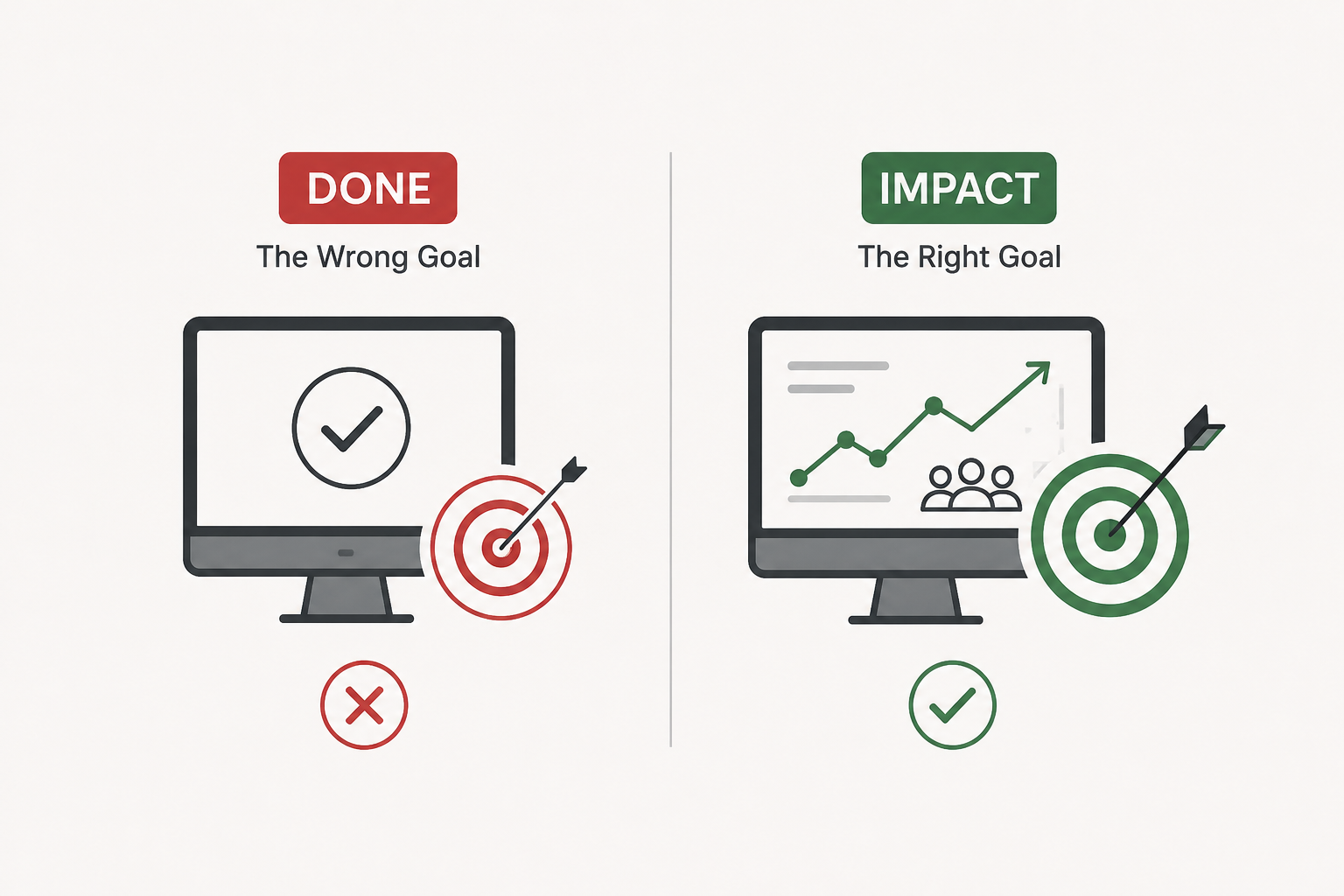
The deeper issue is that "done" is the wrong finish line to aim for. When the entire goal of a website project is to reach launch, everything gets optimized for that moment — and nothing gets planned for the years after it, which is where the site actually has to do its job.
Think about what a website is supposed to do for a small business: be found by the right people, make a good first impression, and turn a stranger into a customer or a lead. None of those are one-time events. Being found depends on staying relevant as search and competitors shift. Making a good impression depends on not looking dated as expectations rise. Turning visitors into customers depends on the site's offers, messaging, and contact paths staying current with what the business actually sells today — not what it sold two years ago.
A site frozen at launch starts drifting away from all three the moment the project closes. Not dramatically. Just gradually, in a way that's easy to ignore precisely because it's gradual.
What Getting It Right Actually Looks Like
Here's the part that surprises people: the businesses that get real, lasting value from their websites usually aren't the ones who spent the most. Plenty of expensive sites underperform, and plenty of modest ones punch well above their budget. The difference isn't the size of the initial build — it's whether the site is treated as something alive.
Treating a website as a living asset doesn't mean constant, expensive overhauls. It means small, regular attention. It means occasionally refreshing content so it reflects what the business is actually doing now. It means keeping an eye on whether the right people are still finding the site. It means periodically checking that the parts responsible for generating business — the contact form, the booking flow, the phone number, the call-to-action — still work and still make sense. None of that is dramatic. Added up over a couple of years, it does far more than a costly rebuild every few years ever could.
The shift is mostly mental. It's the difference between asking "is my website done?" and asking "is my website still working?" The first question has an answer you can check off and forget. The second one you have to keep asking — and it's the only one of the two that actually keeps customers coming in.
Why the Same Mistake Repeats
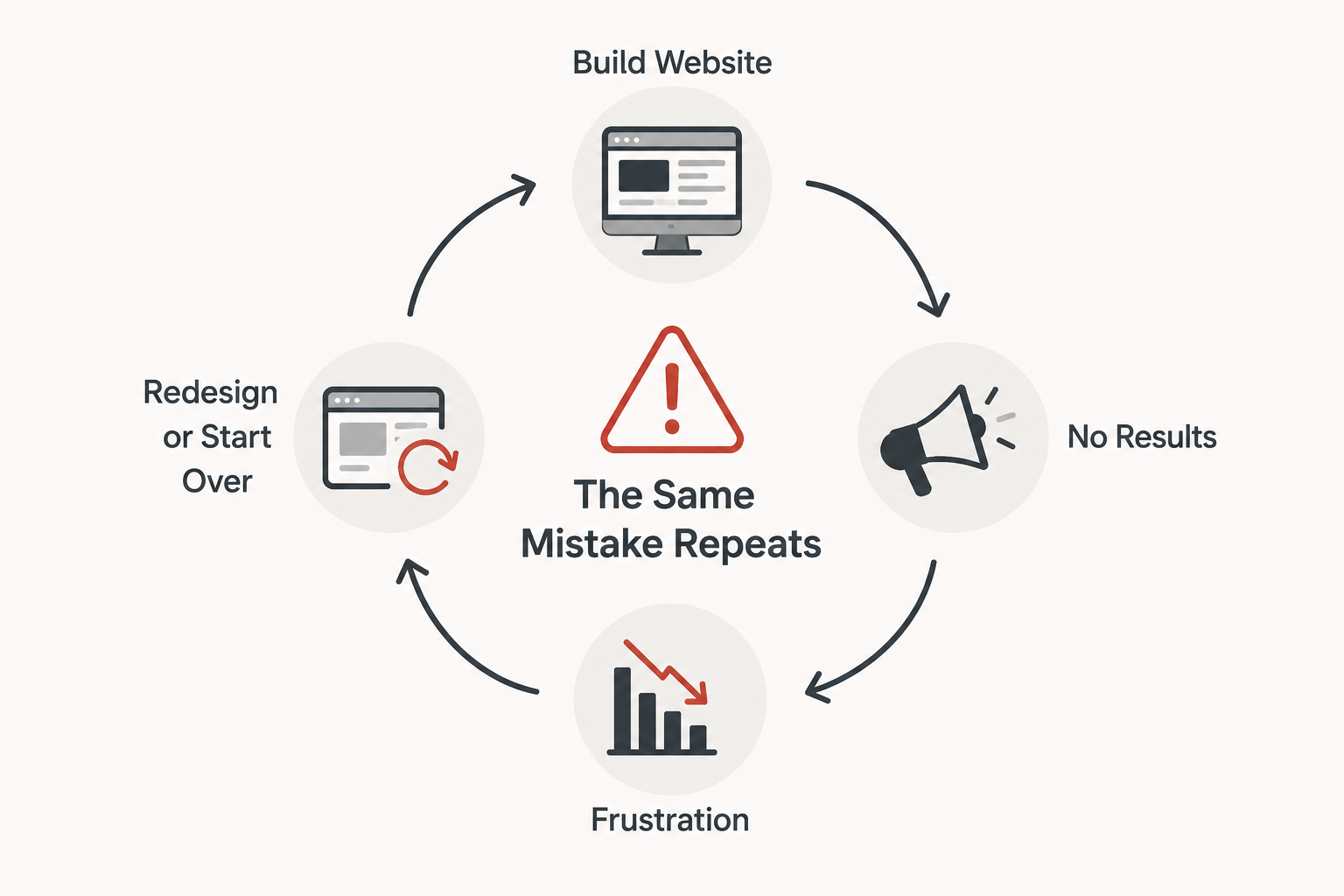
What makes this mistake so sticky is that when a neglected site finally does underperform badly enough to notice, the diagnosis is almost always wrong. Leads have dried up, the site "feels old," so the owner concludes they need a new website. They commission a full redesign, go through the whole build-and-launch flurry again, feel relieved when it's done — and then file the shiny new version under "handled" and walk away from it, exactly like last time.
A year or two later, they're back in the same spot, wondering why it happened again. It happened again because the redesign fixed the artifact, not the habit. The website changed; the way it was treated didn't. This is how businesses end up on their third or fourth "final" website, each one solving a problem that was never really about the design.
How We Think About It
This is a big part of why, at Weblianz, launch day isn't treated as the finish line. Over 10+ years and 1,000+ projects — across web, apps, and now AI-driven tools — the pattern has been remarkably consistent: the clients who get the most out of their sites are the ones we stay in a working relationship with after launch, not the ones we hand a file to and disappear on. It's a big part of why the majority of our clients come back for their next project instead of starting the search over from scratch.
We're not saying every business needs to obsess over its website, or that you should be logging in every week. Most small businesses need the opposite of obsession — they need a sensible rhythm and someone who'll actually be there when something needs attention. But if your site has been sitting untouched for a year or two and you genuinely don't know whether it's still pulling its weight, that uncertainty is worth resolving. A website quietly costing you customers is a much more expensive problem than a website that gets a little regular attention.
If you want a straight answer on whether your site is still working for you, we're happy to take a look — no pitch, just a real conversation.

Comments
Jennifer Adams
This completely changed how I think about our company website. We treated it like a brochure instead of something that should grow with our business.
ReplyMark Robinson
The storefront comparison makes so much sense. Nobody would ignore a physical store for two years, yet that's exactly what we did with our website.
ReplySonia Patel
Refreshing content regularly has made a noticeable difference for us. Small improvements over time really do add up.
ReplyChris Morgan
We rebuilt our website twice before realizing the problem wasn't the design—it was how we managed it after launch.
ReplyDaniel Foster
Great advice. Launch day shouldn't be the finish line. It should be the beginning.
ReplyPriya Sharma
Simple, practical, and something every business owner should read before investing in another redesign.
ReplyLeave a Comment
Your email address will not be published. Required fields are marked *