




How to Build the Right Business Software

Most business software doesn't fail because of bad code. It fails because it was the wrong thing to build in the first place.
That's an uncomfortable idea, because it's easy to assume that if you hire capable developers and they write clean, working software, you'll end up with something valuable. But businesses do exactly that all the time and still end up with tools nobody uses, systems that solve the wrong problem, or expensive builds that get quietly abandoned within a year. The software worked. It just wasn't right.
Building the right software is a different skill from building software well — and it's the part that actually determines whether the investment pays off. Here's how to get it right, whether you're commissioning a custom internal tool, a customer-facing platform, or an automation that's supposed to save your team hours a week.
Start With the Problem, Not the Solution
Almost every software project that goes wrong started with a solution instead of a problem. "We need an app." "We need a dashboard." "We need to automate this with AI." These sound like clear starting points, but they're actually answers to a question nobody asked out loud yet.
The right starting point is the problem underneath. Not "we need a booking app" but "customers can't book without calling us, and we're losing the ones who won't." Not "we need a dashboard" but "we make decisions blind because our numbers live in five different places." When you lead with the problem, the right solution often turns out to be simpler, cheaper, or just different from what you first imagined — and occasionally you discover the thing you were about to build wouldn't have solved the real issue at all.
A good development partner should push you back to the problem before talking about the build. If someone starts quoting features and timelines before they understand what you're actually trying to fix, that's a warning sign, not efficiency.
Define What "Working" Actually Means
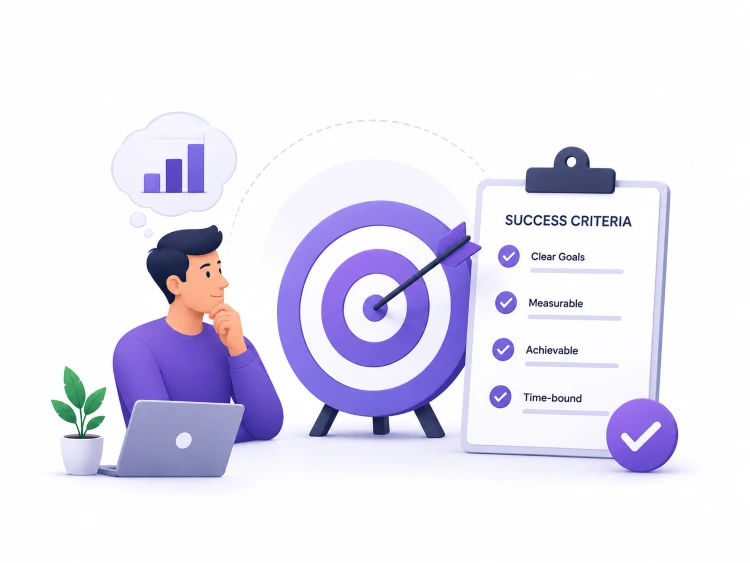
Before anything gets built, you need a clear answer to a deceptively simple question: how will you know if this worked?
Vague goals produce vague software. "Make things more efficient" or "improve the customer experience" can't be built toward, because nobody can tell when they've been achieved. Specific goals — "cut the time to process an order from ten minutes to two," "let customers self-serve the three requests that currently flood our inbox," "give the manager one screen that shows what used to take an hour to compile" — give the whole project a target. They shape what gets built, what gets left out, and how you judge the result.
This matters for scope, too. Clear success criteria are the best defense against the most common way software budgets explode: endlessly adding features because no one agreed on what "done" meant. If a proposed feature doesn't move you toward the defined outcome, it can wait. That single discipline saves more projects than any technical decision.
Build the Smallest Version That Proves It Works
There's a strong temptation to build everything at once — every feature, every edge case, the complete vision — before releasing anything. It almost always backfires. Big all-at-once builds take longer, cost more, and, worst of all, you don't find out whether the core idea actually works until you've already spent the whole budget.
The better approach is to identify the smallest version that delivers real value and get it into real hands first. Not a broken half-product — a genuinely useful core that solves the main problem, with the extras deliberately deferred. This does something valuable: it lets reality weigh in early. Real users reveal things no planning meeting ever will — which features they ignore, where they get stuck, what they actually need that nobody anticipated. You then build the next layer based on evidence instead of guesses.
Businesses that build this way waste far less, because they stop pouring money into features that sounded essential in a meeting and turned out to matter to no one.
Plan for After Launch From the Start
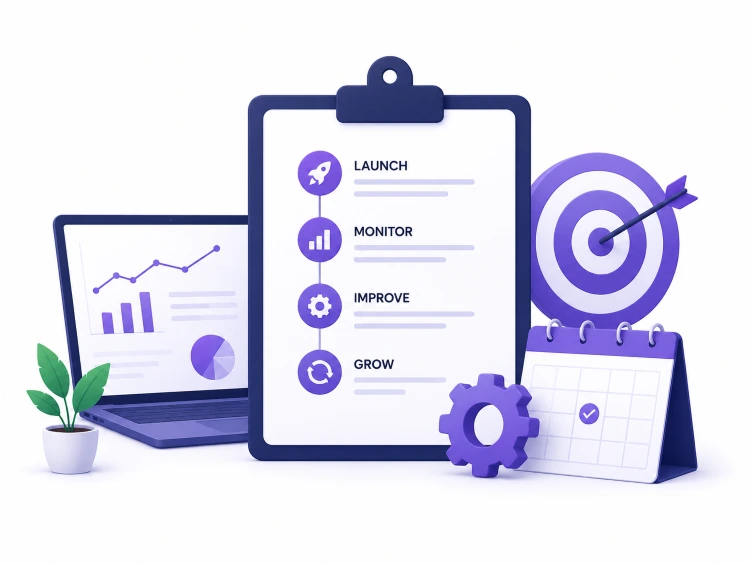
Software isn't a thing you finish; it's a thing you run. This trips up a lot of businesses, because they budget and plan as if launch is the finish line, then are surprised when the tool needs maintenance, updates, fixes, and adjustments as the business changes around it.
Real software has an ongoing life. Requirements shift. Small bugs surface. The thing your team loved in month one needs a tweak by month six. A build that isn't planned to be maintained slowly rots — not because it was built badly, but because no one accounted for the fact that living tools need tending. Before you start, get clear on who supports it after launch and what that looks like. A project priced as if it ends at delivery is usually one that will quietly cost you more later.
Make Sure You Can Actually Understand the Decisions
You don't need to be technical to commission good software. But you do need a partner who can explain what they're building and why, in language you can follow. This is one of the most reliable signals of whether a project will go well.
When explanations are all jargon and you find yourself nodding along without really understanding, it's easy to end up agreeing to things that serve the build more than they serve your business. A good team translates. They tell you the trade-offs in terms of your goals — this option is faster but harder to change later, that one costs more now but scales better — and let you make informed decisions. If you consistently leave conversations more confused than when you went in, that's not your failing to understand. It's often a sign the relationship isn't built for someone in your position.
The Thread That Ties It Together
Notice that almost none of this is about technology. Starting with the problem, defining success, building the smallest useful version, planning for the long term, insisting on clarity — these are all about understanding the business first and building second. That order is the single biggest predictor of whether software turns out right. The businesses that get it wrong usually reversed it: they started with a build and worked backward toward a justification.
How We Approach It
This is exactly the order Weblianz works in. Across web, apps, and now AI-driven tools, the throughline has been the same: understand the real problem before proposing a build, define what success looks like, start lean, and stay in the relationship long after launch. It's a big part of why the majority of our clients come back for their next project instead of starting the search over.
That order shows up the same way across very different clients. With a trading platform like Galileo FX, it meant getting clear on the actual problem before any screen got designed. With an EdTech platform like Training Camp, it meant defining what "working" looked like early, then staying in the relationship well past launch instead of treating delivery as the finish line. It's the same approach we've carried into work with Single Rulebook, wfp.org, and merly.ai — different industries, same starting point: understand the problem before proposing the build.
If you're weighing a software project — or unsure whether the one you have in mind is even the right thing to build — the most valuable step is often just talking it through with someone before committing to anything.
If you'd like to think through your project with a team that starts from the problem, not the sales pitch, we're happy to help. Book a free consultation, or start a chat with us — no pressure, just a real conversation about what you're trying to build.

Comments
Derek Holloway
The line about starting with a solution instead of a problem hit close to home. We asked for "a dashboard" and never once defined what decision it was supposed to help us make.
ReplyPriya Nathan
Defining what "working" actually means before starting is so underrated. Our last project ballooned because nobody had agreed on what done looked like.
ReplyMarcus Webb
We tried to build everything at once on our first attempt and it was a disaster. Wish someone had told us to ship the smallest useful version first.
ReplyAisha Rahman
The point about planning for after launch is something we learned the hard way. Nobody budgeted for maintenance and the tool just slowly stopped working the way we needed.
ReplyTom Ferreira
Understanding the decisions being made on our behalf changed everything for us. Once we found a team that explained trade-offs in plain language, the whole project felt different.
ReplyGrace Lindqvist
Completely agree. If you're just nodding along in every meeting, that's a sign to ask more questions, not fewer.
ReplyLeave a Comment
Your email address will not be published. Required fields are marked *